17.3.15

South by Southeast curated by Patrick D. Flores and Anca Verona Mihulet March 07 - May 03,2015


South by Southeast, a group exhibition showing works of artists from sixteen different countries, focuses on a very particular area: the southeast.


Commonplace is the notion that the south lies at the opposite of the north, which is supposedly ascendant, more prone to power, closer to the imagined center. The south is cast as peripheral and dispossessed, gathered at the perceived fringes of province on a map of asymmetries. Such a curious psycho-geographical, or geopolitical imagination yields another antinomy: the west and the east, bearing more or less equivalent valences as north and south. In this attempt at reducing the world to polarities and verticalities, the west is modern and everywhere and the east is timeless and far. Exceptional is the situation in which the south and the east cohere to form the coordinate of the southeast, possibly a double negation: not north, not west.


How do we figure the southeast? And how do we do it across the globe in which lateral coordinates might emerge? This is an initial effort and it involves contemplating a possible liaison between two articulations of the south east, one in Asia, the other in Europe, both rendered proximate in such a way that they converse across distance and form vectors of relations that craft robust narratives of the contemporary and of history, categories to which the term is appended: contemporary art and history of art / art history.


Artists:
Pio Abad, Ana Adamovic, Apparatus 22, Jon Cuyson, Maung DayDoplgenger, Koken Ergun, Dex Fernandez, Ahdiyat Nur Hartata, Ivan Hrkas, Istvan Ist Huzjan, Ana Husman, Eisa Jocson, Kernel, Andreja Kuluncic, Dalibor Martinis, Sebastian Moldovan, Jakrawal Nilthamrong, Dan Perjovschi, Herra Phalasari, Mark Salvatus, Ali Taptik, Krassimir Terziev, Pradeep Thalawatta, Trung Cuong Tung, Lyno Vuth, Leung Chi Wo, Yao Jui Ching

Address: OSAGE Gallery, 4/F, Union Hing Yip Factory Building, 20 Hing Yip Street, Kwun Tong, Kowloon, Hong Kong


Mail: info@osagegallery.com

Phone: +86 852 2793 4817
Web: Osage Hong Kong
Hours: Mon. - Sat. 10:30am - 6:30pm; Sun. 2:30pm - 6:30pm


26.9.14

The Shadow Factory curated by Gary- Ross Pastrana


16 April - 04 May 2014 By Cocoy Lumbao


As every work of art is unique, so are the individuals that are responsible for each artwork. Artists are characters, and are in themselves works-in-progress. These characters, just like their works, are susceptible to an audience’s criticisms, impressions, and varying standards of judgment. These judgments invariably affect the value ascribed to the piece each artist makes. The identity of the artist becomes inseparable to his art. Authorship is a concept embedded in each produced object, but it is a volatile concept, which can be as shadowy and as fictitious as the work of art itself.

In The Shadow Factory, curator Gary-Ross Pastrana sees identity and authorship as a platform for artists, a method for production at their disposal. As the title of the show is borrowed from a covert plan by allied forces during the Second World War to secretly turn generic factories into instruments for building aircraft, it reflects the same kind of scheme artists use to attend to a specific activity, usually veiled under a different persona. It recalls the time when Marcel Duchamp invented the character Rrose Selavy to undermine concepts in art-production, or the circumstances when writers and musicians assume a different name to undertake a specific genre dissimilar from works they are usually known for.

The Shadow Factory examines this prevailing concept that attest to the volatility of authorship in art: the artist’s inclination to conceal one’s identity. By presenting established artists with equally important projects under pseudonyms, pen names, alter egos or as part of an anonymous collective, the exhibition provides possible readings for the artists’ need to take on clandestine roles. Through the works of contemporary artists with fabricated personas such as Angel Flores,CrocogatorSaturnino BasillaTito & Tita, and artists taking on collective names to eradicate the idea of a single authorship such as BrokeDepartment of Everyday Productions, and The Weather BureauThe Shadow Factory re-evaluates these tendencies as a platform for the artist to produce a specific kind of art, which may entail mystery, anonymity, affinity, or the desire to re-invent oneself.

For some artists, a default nomenclature is not enough to justify the act of venturing into a different set of work. Whether out of psychological, socio-political, conceptual, formal or a mutual agenda, a different identity (or non-identity) has to be attached to the object produced. Different conditions can be associated with the move—more room for creative freedom, the exhilaration found in the creation of hidden identities, or the improvement in objectifying art by dislodging any personality or trait that can be attached to it. With this group of already established artists, cloaked and propped by a different set of name and a different set of work, sharing a common space may provide a brief illumination and an unmasking—to discover what lies behind the motive for their aliases.

The Shadow Factory with Angel Flores, Broke, Crocogator, Department of Everyday Productions, Saturnino Basilla, Tito & Tita, and The Weather Bureau runs from 16 April to 04 May 2014 at Silverlens Gillman Barracks at 47 Malan Road, #01-25 Gillman Barracks, Singapore 109444


15.6.13

Kerel


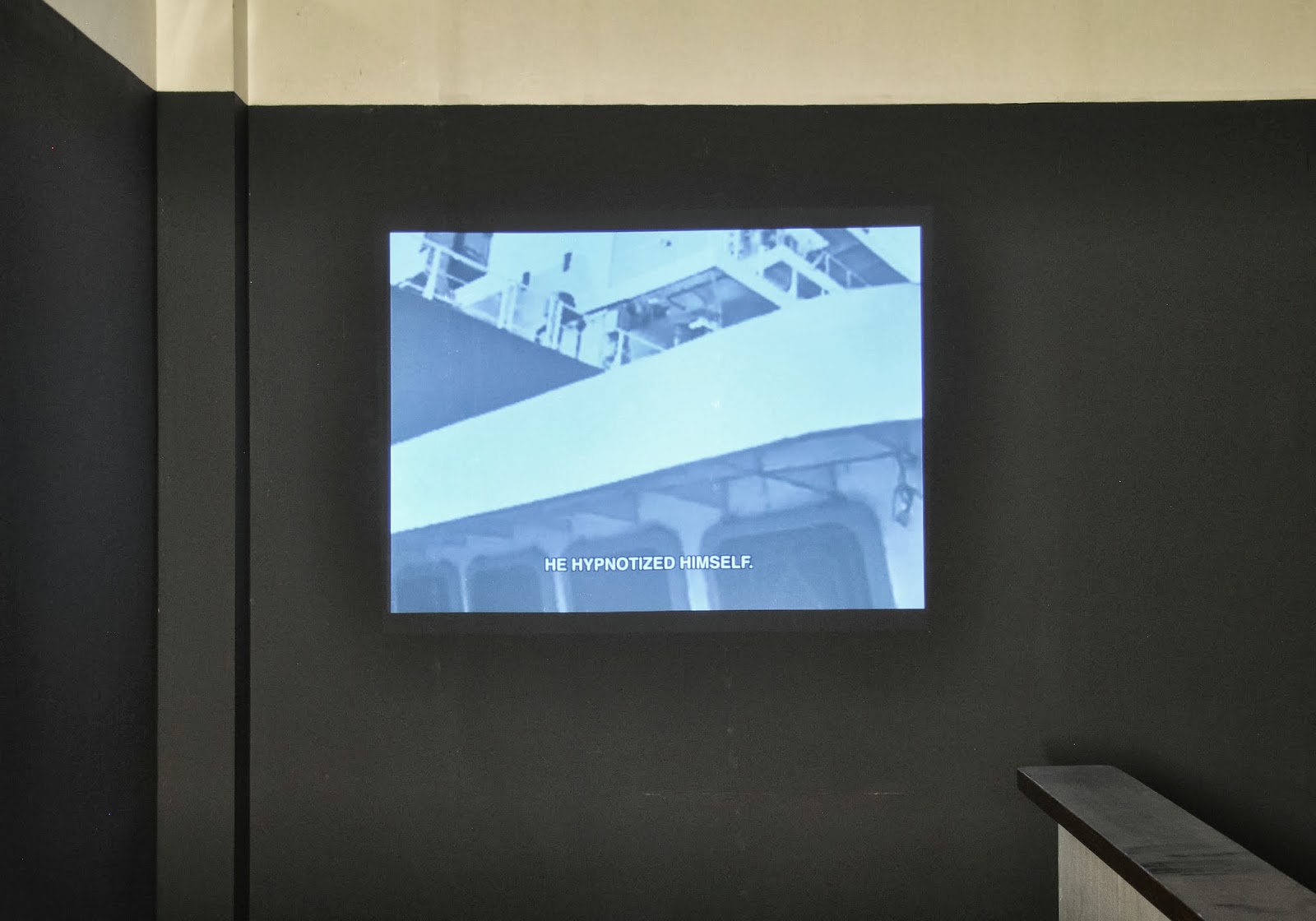
"Kerel” takes its inspiration from the German avant-garde filmmaker Rainer Werner Fassbinder’s Querelle, which is a film adaptation of Jean Genet’s novel Querelle de Brest.  Cuyson’s “Kerel” puts at its center the narrative of the sea and weaves the tale of a Filipino sailor at work on a ship. Using performance and film, drawing and painting, sculpture and set design, Jon Cuyson shuttles between desire and conflict with dream and reality to anchor the fluctuating waves of the undefined narrative while pinpointing what is at stake in the dismantling of the self. The exhibit reflects on notions of identity, authorship, originality, and authenticity.  

For Cuyson, art making is an inclusionary space that can both question and acknowledge the historical and logical conditions of its existence in the context of the present. Thus, his works emphasize a concern for a site in flux, vulnerable and malleable where change is not only possible but also continuously taking place.

In 2010, Jon Cuyson formed the Department of Everyday Productions as a fictional platform intended for the generation of artistic activities in mind of our multivalent reality. The Department of Everyday Productions or DEPT. is a conceptual framework for the research and development of potential productions, much like a cinematic production company. It aims to investigate and mobilize aspects of different processes derived from the myriad of collaborative activities in film production. Hence, his works reflect on itinerant perspectives wherein a mutation of narratives and mediums occur in order to open new ways of recognizing and navigating possibilities, not exclusively but rather inclusively. 

Cuyson’s multifaceted activities aspire to open new perspectives in seeing, acting and re-thinking contemporary insecurities about the built environment and our relationship to the everyday.


20.2.12

Dream Sequence: Scene #8 (Le Samourai)


Dream Sequence: Scene #8 (Le Samourai)

The exhibition perceives the city as a resource of fictive narratives, private (hi) stories, dreams and desires, still in the process of re-creation and speculation. Through fragmentation, urban and architectural potential is presented as a continuously reconstructed concept that is negotiated though images, surfaces, ready-made objects and everyday practices that make manifest notions on place, identity and consumption.


The exhibit uses the 1967 French crime thriller by French filmmaker Jean-Pierre Melville, as the conceptual engine for the development of the constructed "scene" which includes objects that allow the intersection of painting,sculpture, photography and scenography. These transitory expressions of lived experience bear witness to a particular shift in perception that navigates between document and memory, reality and    
imagination, figuration and abstraction.


http://westgallery.org


Title: Untitled (New Life for Me # 6)
Medium: Acrylic on canvas glued on wood, hardware (dog leash)
Dimensions: 72” x 168” 
Year: 2012


Actor 1: Where are you from?
Actor 2: I am from the northern region and I come from a green agricultural area.

Actor 1: How did you hear about working here?
Actor 2: I heard from a friend who is working here.

Actor 1: Did you arrive with any money?
Actor 2: Yes I arrived with money to pay for rent, food and transport before I could find work here.

Actor 1: Was it expensive to come here?
Actor 2: Yes very. I borrowed the money to come here.

Actor 1: Was it hard to get a visa?
Actor 2: No it was easy and all done via an Agent.

Actor 1: Agent?
Actor 2: I got my visa via an Agent from here that arranges the visa "Invitations". The Agent knows people at the Embassy and arranged the invitation for me. The journey here was long and tiring.

Actor 1: Were you afraid to come here and what were you afraid of?
Actor 2: I was a little nervous but I have friends and family already working here.
I would not have come here alone if I did not know anyone.

Actor 1: What do you like and not like about living here?
Actor 2: I like the pay here but I don’t like the climate. The average temperature back home now is 30 degrees and there is no winter.

Actor 1: Is hard or easy to find work here and what do you do here?
Actor 2: It was easy to find work by word-of-mouth via friends here. I work as a cleaner and babysitter.

Actor 1: Why did you choose our country and why did you come here?
Actor 2: Because it was very easy to enter here. I came here for work because pay is low at home. I must pay for my children's education.

Actor 1: How many children do you have?
Actor 2: I have two kids, one is aged 19 and the other is aged 14. My first child is at college and my second child is at high school, I must pay for both to have an education.

Actor 1: Do you miss family and home?
Actor 2: Yes very much.

Actor 1: Do you send any money home and how do you send it home?
Actor 2: I send money back for my family via a bank.

Actor 1: Will you stay long here?
Actor 2: As long as is financially necessary.

Actor 1: What has been the hardest thing to adjust to living here?
Actor 2: The cold climate and it's difficult to find the fresh vegetables and fresh fish that we get back home.

Actor 1: Have you had any good or bad experiences of living here?
Actor 2: The police are always asking me for my documents.

Actor 1: What advice would you give other women like you who want to work here?
Actor 2: Not to carry too much money on you as the police might take it.

Actor 1: Are there many women from your country living and working here?
Actor 2: A few thousand I think?

Actor 1: Do you know any women who have not liked working here?
Actor 2: No, but some return home.


Title: Untitled ( I've Been Waiting For A Long,Long Time)
Medium: Inkjet print on archival photographic paper
Dimensions: 40" x 60"
Year: 2010


Title: Untitled (Wall Props #18)
Medium: Acrylic on canvas, plastic bag
Dimensions: 12" x 16"
Year: 2012


              Title: Untitled (My Only Opponent)
              Medium: Acrylic on canvas, hardware,fabric,helmet
              Dimensions: 27" x 13" x 62"
              Year: 2012


                 Title: Untitled (New Life For Me #7)
                 Medium: Acrylic on canvas glued on wood, hardware, rubber gloves
                 Dimensions: 60" x 72"
                 Year: 2012


Title: Untitled (One of Those Days)
Medium: Acrylic on canvas, hardware, acrylic on cast foam, wood, duster
Dimension: 85" x 25" x 35"
Year: 2012